
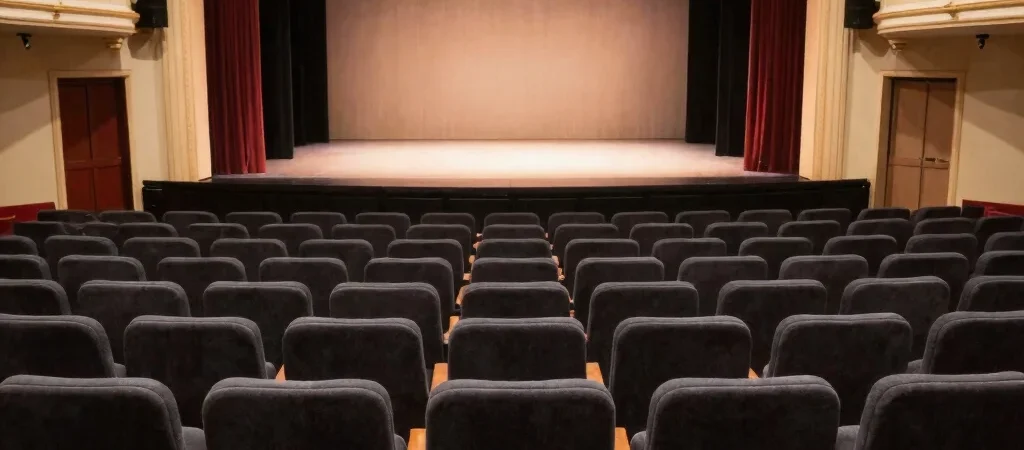
At an opening-night performance, the room tells you things before the actors do. You hear programs fold, see late arrivals find their seats, and feel the audience settle into a shared expectation. A good theater review notices that atmosphere, then turns its attention to what the production makes of it.
Watch the room take shape
The experience is partly built from practical choices: how clearly dialogue reaches the back rows, whether a set frames or crowds the performers, and how lighting guides the eye. These are not side notes to the performance. They shape what the audience can follow and where its attention goes.
An unusual staging choice can be striking from one seat and harder to read from another. A grounded review describes the effect without turning one person’s view into a universal claim. Specifics—a blocked sightline, a deliberate pause, a musical cue that changes the mood—give readers a better sense of the evening than a row of adjectives.
Describe choices, not just reactions
Audience response is part of live performance, but applause alone cannot explain why a scene worked. Look at the craft underneath it: the timing of an entrance, the tension between two actors, or the way a sound design carries a transition. Criticism becomes useful when it connects a reaction to a choice onstage.
The same care applies when a moment does not land. Instead of declaring that a scene is slow, a reviewer can describe where its rhythm loses focus and what that does to the story. That kind of judgment is clear without mistaking personal taste for an objective fact.
Keep the work in view
Opening night carries its own conditions: a company meeting the public, a room learning the production’s pace, and the energy of a first audience. Those conditions can help explain an evening, but they do not excuse a review from examining the work in front of it. The most revealing criticism stays close to the choices that made the performance distinct.
After the curtain call, remember one precise moment: a line delivered into silence, a shift in light, or a scene that changed the room’s energy. Start there. It is often a more honest account of the night than trying to summarize every reaction.